
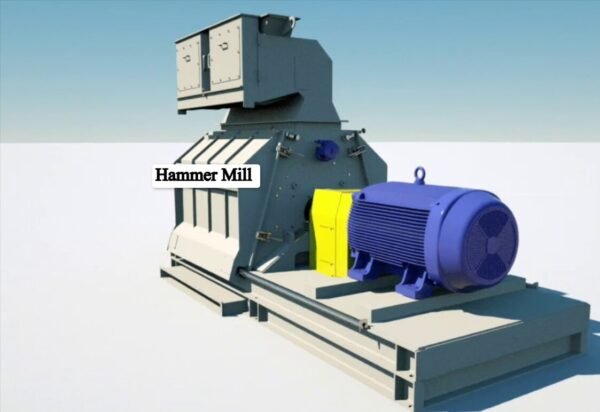
Hammer mills are an essential tool for industries like agriculture as well as food processing, pharmaceuticals and mining. It’s utilized for crushing, grinding and break down materials into smaller, manageable sizes. The efficiency and simplicity of a hammer mill makes it a preferred choice for many applications, however there are some disadvantages. This article will discuss the advantages and drawbacks of hammer mills in depth.
What is a Hammer Mill?
Hammer mills are mechanical machine that is made up of a rotating shaft and the hammers that are attached. When the machine is operating it, the hammers move to crush or pulverize the materials being fed to the mill. The output material is determined by the kind of grate or screen used inside the mill. Hammer mills are incredibly versatile and are able to handle a range of different materials, including minerals, grains, and waste materials.
Advantages of Hammer Mills
- Versatility
Hammer mills are able to process various types of materials that include soft, medium-hard and fibrous materials. This flexibility makes them ideal for industries like mining, agriculture and pharmaceuticals. - Simple Design and Operation
The construction of a hammer mill quite simple, with less moving parts, which makes it simple to maintain and operate. The operator requires only minimal instruction to be able to use the machine efficiently. - High Efficiency
Hammer mills run at high speed, allowing them to process material quickly and effectively. This can be particularly useful in production environments that are highly-demanding. - Adjustable Output Size
By altering the screen or the grate size, users are able to alter the size of the output particle which makes the hammer mill suitable for different uses. - Cost-Effective
Hammer mills tend to be cheaper than other milling equipment making them an affordable option for small and medium-sized enterprises. - Durable and Robust
The sturdy construction of hammer mills assures longevity, even under difficult conditions. This makes it less likely to need of repairs and the amount of downtime. - Reduction of Waste
Hammer mills are highly efficient at recycling and transforming waste materials including industrial by-products and agricultural residues and converting them into valuable products. - Energy Efficiency
As compared to other milling machines they are efficient in energy use, which can reduce operational expenses over the course of time.
Disadvantages of Hammer Mills
- Noise and Vibration
Hammer mills create a lot of vibration and noise during the operation, which could disrupt the environment in certain settings and could require additional measures to reduce sound. - Limited to Dry Materials
Hammer mills work best when using dry materials. The sticky or wet substances could block the machine, decreasing its the efficiency and making it necessary to clean frequently. - Particle Uniformity Issues
The size of the particles produced by a hammer mill could not be as uniform as those of other grinding methods like roller mills, which could be a problem for certain types of application. - Wear and Tear
The screens and hammers in the hammer mill will wear with time, particularly when working with abrasive materials. Routine maintenance as well as replacement of the parts are essential to ensure the efficiency of. - Dust Generation
Hammer mills produce an enormous amount of dust when they are operating that poses dangers to the health and safety of users and could affect the quality of the air. - Power Requirements
Although they are energy efficient they still require a constant power source for operation, which can be a challenge in areas that have limited access to electricity. - Not Suitable for Very Hard Materials
Although hammer mills can work with diverse materials, extremely tough substances such as certain kinds of metals or rocks can cause damage to the hammers and other parts. - Risk of Over-Grinding
If not properly monitored If not monitored, hammer mills may over-grind materials, resulting in excessive fines that are not appropriate for the purpose of use.
Comparison Table: Advantages vs. Disadvantages
| Advantages | Disadvantages |
|---|---|
| Flexible, it processes a broad variety of materials | Creates vibration and noise |
| Simple design, easy to use | Materials that are dry only. |
| Fast processing and high efficiency | Inconsistent particle size |
| Size of output that can be adjusted | The wear and tear of the parts |
| Affordable for small and medium enterprises. | Dust production can be an health hazard |
| Strong and durable construction | It requires a constant power supply |
| Reduces waste through recycling materials | Not recommended for extremely tough materials |
| Energy efficient operation | Risque of over-grinding material |
Applications of Hammer Mills
- Agriculture Grindering grains to feed animals, or processing agricultural residues.
- Food processing: The process of pulverizing herbs, spices and food items.
- Pharmaceuticals Making active components into fine powders.
- Mining Crushers and grinders ore and minerals.
- Waste Management Recycle industrial and biomass wastes into products usable.
How to Overcome Disadvantages
- Vibration and Noise: Set up soundproofing enclosures as well as vibration dampers.
- Dust Control Utilize dust collecting systems in order to keep air quality and ensure safety of the operator.
- Maintenance Make sure you regularly check and repair worn components to prevent interruptions and to maintain effectiveness.
- Moisture Management Dry the materials prior to feeding it into the mill in order to keep them from getting clogged.
Conclusion
Hammer mills are highly efficient and versatile machines for processing materials with numerous benefits like cost-effectiveness, ease of use and high efficiency. However, their limitations such as wear and noise, as well as limitations on certain materials, must be controlled to reap the maximum benefits.
When you know the benefits and drawbacks of hammermills business owners can make informed choices about whether the equipment is suited to their particular needs. If properly maintained and operating methods, hammermills can be an asset in different sectors.